What neck and shoulder massage actually does for stiffness
How neck and shoulder massage releases tight muscle, improves local circulation and eases tension headaches — the real benefits, who feels them most, the risks of doing it wrong, and when to see a doctor instead.

Most people only look into a neck and shoulder massage once the ache has dragged on for weeks, and end up picking a package without knowing what it actually does. The real neck and shoulder massage benefits come down to three specific things — loosening tight muscle, improving circulation, and taking pressure off the back of the neck — not a vague sense of “feeling better.” This article covers what massage genuinely helps with, and the cases where it isn’t the right choice at all.
Why this area tightens up so readily
An adult head weighs roughly 4 to 5 kilograms, and the muscles at the back of your neck hold it up all day. Sitting upright, that weight travels down through the spine. Lean slightly toward a screen, though, and the head’s centre of gravity shifts forward — the neck muscles immediately have to pull against it, and keep pulling for hours without a real break.
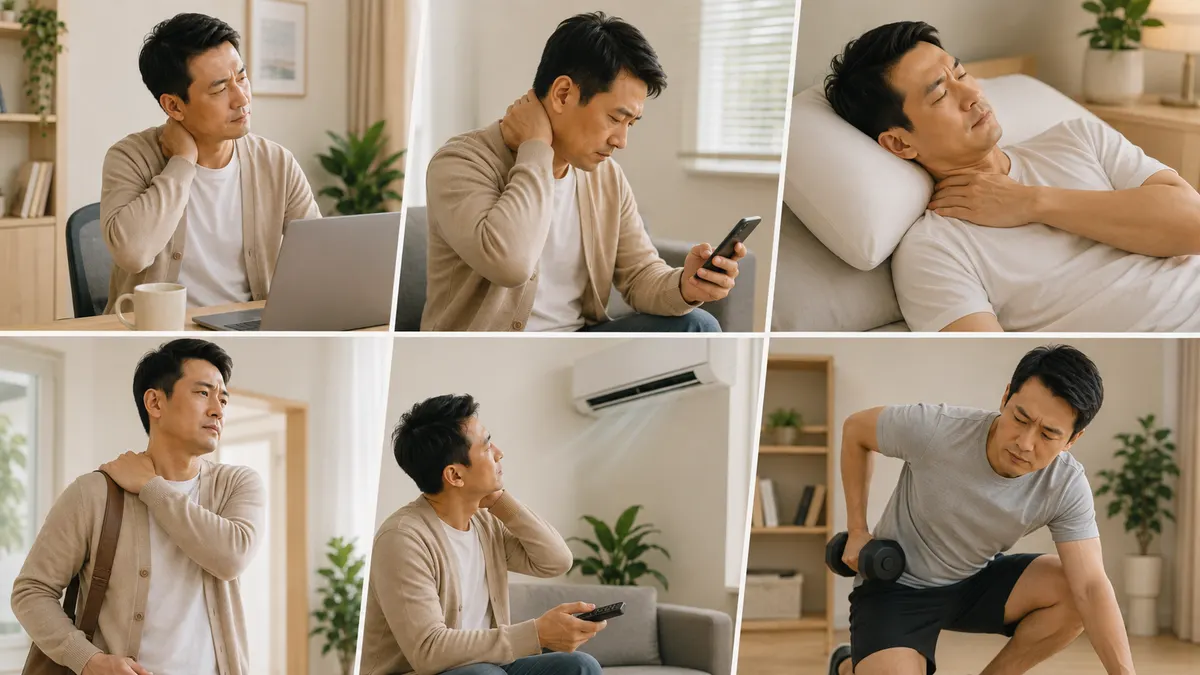
Around 80% of office workers have dealt with neck and shoulder pain at least once, and posture isn’t the only cause: badly matched desks and chairs, muscle weakening from inactivity, work stress producing muscle spasm, and even repeatedly moving between air-conditioned rooms and outdoor heat all affect circulation through the area.
Muscle held in contraction long enough develops localised hard spots — they feel like knots or tight bands under the skin. That is precisely what a properly done session targets.
What neck and shoulder massage actually does

The work happens along three lines at once, not one:
- Releasing muscle that is actively contracted. The therapist kneads, glides and presses along the direction of the muscle fibres so tight points let go layer by layer, instead of skimming the surface. This is the biggest single difference between therapeutic work and rubbing your own shoulder at home.
- Improving local circulation. Acupressure massage applies hand pressure to specific points to promote blood flow, release muscular tension and relax body and mind together. Warmed, released muscle is why the area usually feels distinctly warm and light afterwards.
- Taking pressure off the nape-to-temple line. Many dull headaches that start behind the neck and spread toward the temples originate in over-tightened neck muscle. When that muscle lets go, the heavy-headed feeling generally eases with it.
One thing worth stating plainly: these effects happen in muscle and circulation, not in the joint structure. Massage softens muscle that is bracing; it cannot realign vertebrae or discs — and shouldn’t try.
How acupressure differs from ordinary rubbing here
General rubbing spreads pressure evenly to warm and relax the region. Acupressure concentrates it into specific points. Points commonly used for this region include Dazhui, Jianjing, Fengfu, Fengchi, Tianzhu, Shousanli, Hegu and Zhongzhu — within a single neck and shoulder session the two approaches are normally combined rather than kept separate: warm and release the muscle first, then concentrate on the sore points.
As a first-time guest you don’t need to learn any point names. What matters more is whether the therapist locates the genuinely tight area, and whether they adjust pressure based on your feedback.
Who notices the benefit most

Office workers at a computer all day. Holding a slight forward lean toward a monitor for hours keeps the muscles at the back of the neck working with no recovery gap long enough to matter.
Anyone who looks down at a phone often. The greater the angle of the bend, the more load the neck muscles carry — the gap between eye-level viewing and a full downward tilt is considerable.
People sleeping in an awkward position or on the wrong pillow. A stiff neck immediately on waking, hard to turn to one side — this acute type tends to respond fastest to a single gentle session.
People whose work repeats on one side. Hairdressers, dentists, anyone who habitually carries weight on one shoulder — one side works considerably harder than the other, and imbalance and pain follow over time.
If the first description fits you, which package office workers should choose for neck and shoulder fatigue goes further into matching length and frequency to a working schedule.
How a session is structured, step by step
Knowing the sequence removes most first-visit uncertainty. A neck and shoulder session generally runs in five stages: a short conversation about where it hurts and how you work; locating the tight areas by hand along the neck, shoulders and upper back before any real pressure is applied; warming and loosening that region with broad gliding and rolling strokes; concentrated work on the sore points, with acupressure worked in where it helps; and a closing stretch with a brief note on the posture worth holding onto afterwards.
The first stage matters more than it sounds. Describing your job, your sleeping position and the pressure you find comfortable gives the therapist enough to work from — and it is also the moment to mention any condition from the caution list further down, before the session starts rather than during it.
What it feels like afterwards
For stiffness that has just appeared, the neck usually turns more easily and the shoulders feel lighter right after the first session. For tension built up over weeks, the relief becomes clear after several sessions spaced about a week apart — muscle needs time to get used to being released rather than permanently braced.
Mild soreness for a day or two after deeper work is a normal muscular response, much like the day after exercise. But if the pain increases rather than fading, or lasts beyond a few days, that is no longer a normal response — report it and skip the next session.
Three things worth asking before you choose a place
The neck has a more complex arrangement of blood vessels and nerves than the back or legs, so the standard of skill required here is higher. Three short questions will tell you whether a place works to that standard:
Do they ask about your health first? Doctors advise caution for anyone with cervical spine disease, disc herniation, high blood pressure, heart conditions or a history of stroke, and recommend choosing a place with trained staff. Somewhere that asks properly before starting is somewhere that knows what it is doing.
Is there any neck-twisting involved? The “crack the neck until it pops” move gets mistaken for a sign of effective work. The sound measures nothing, and a relaxation session has no need for it. At Tam Dac no package includes that manoeuvre — the result comes from locating the tight muscle and releasing it gradually, not from range of force.
Can you adjust the pressure mid-session? Medical guidance is explicit: stop immediately if pain, numbness, dizziness or nausea appears during the session. Those four signals are not the body “opening up” as folklore claims — they mean stop and speak up. In a session done properly you stay in control of the pressure rather than gritting your teeth until the hour is over.
The limits — when to see a doctor instead
Neck and shoulder massage supports muscular fatigue caused by posture, stress and repetitive movement well. It does not replace medical treatment for structural problems such as cervical degeneration or nerve root compression.
See a doctor first, without massage, if you have: numbness or weakness running into the arm, or a weaker grip than usual; dizziness when turning your head; pain that began after an injury or impact; sudden severe pain; or pain with fever. When you should see a doctor instead of getting massage sorts these signals into clearer groups.
Acupressure should also be avoided over open wounds, areas that are swollen, red and warm, scar tissue, boils, blisters, or areas with vein disorders — if your neck or shoulders are in any of those states, say so before the session begins.
Making the result last longer
A session deals with the muscle that is tight right now, but the underlying cause — posture and workload — remains untouched unless something changes. The three adjustments that matter most: sit with your elbows at roughly 90 degrees, keep the screen about 50cm from your eyes, and take regular stretch breaks between work blocks.
Beyond that, changing position every 30 minutes matters more than holding a “correct” posture all day — no position is a good one once it’s been held too long. The neck and shoulder massage benefits hold up far longer alongside these small changes than they do when the session ends and the old habits resume unchanged.
Frequently asked questions
Can neck and shoulder massage cure the problem permanently? No. It relieves stiffness caused by muscular tension; it isn’t a treatment for disease. If the pain relates to joint structure, you need a doctor’s diagnosis with imaging.
How long should one session run? For the neck and shoulders alone, 30 to 60 minutes is the usual range. Medical sources also caution against very long single sessions — more time does not mean better results.
How often to maintain the effect? For desk-based work, once every one to two weeks is generally enough to stop tension accumulating again.
Should the pressure be heavy when it hurts a lot, to fix it faster? No. Heavier pressure doesn’t shorten recovery, and on the neck excessive force tends to increase pain instead. State the pressure you’re comfortable with at the start of the session.
Where can I check the session lengths? See the neck and shoulder massage service page, or note exactly where it hurts on the booking form so reception assigns a therapist used to working this area.